
Help for carers
Short, practical guides for families and carers of people living with dementia. Free to read and to share.
Each guide first appeared on our Facebook, Instagram and TikTok. We have gathered them here so they are easy to find again.
A note before you start
These guides are general information, not medical, legal or financial advice. For anything about your own situation, talk to your GP, a solicitor or a Wayfinder.
Signs and symptoms of dementia
Everyone knows about memory loss. These are the nine that get missed.
- Getting lost on familiar routes
- Misjudging distances: steps, kerbs, reaching for a cup
- Struggling to find the right word
- Becoming easily upset
- Struggling with small decisions
- Acting out of character
- Repeating questions and phrases
- Putting objects in odd places, like keys in the fridge
- Losing track of time and dates
One on its own is probably nothing. Several, getting worse over months, is worth a GP visit.
And it might not be dementia. A thyroid problem, a vitamin deficiency, depression or an infection can all look similar, and all are treatable. That is exactly why it is worth checking.
Send this to someone quietly worrying.
Sources
- Alzheimer’s Society: Dementia symptoms and signs
- NHS: How to get a dementia diagnosis (other causes of memory problems)
- This guide is written in our own words. Follow the links for the original information.
“I want to go home”: what to say
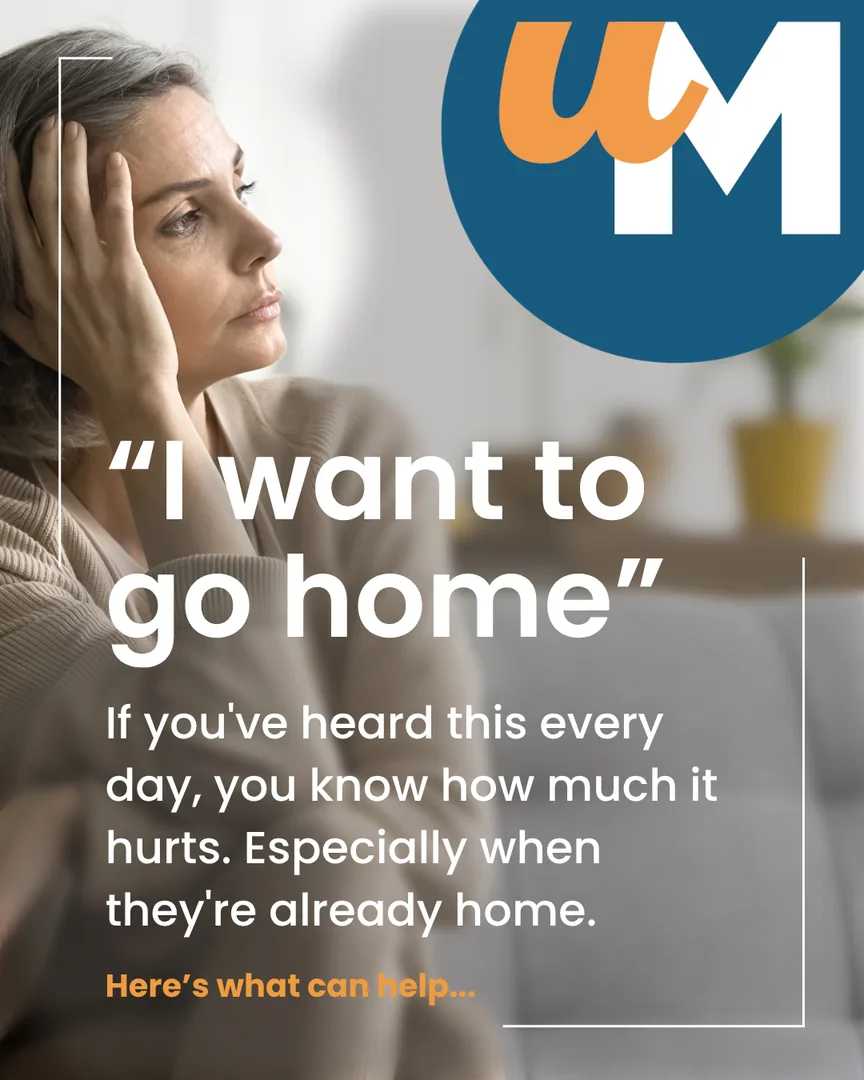
If you’ve heard this every day, sometimes every five minutes, you know how much it hurts. Especially when they’re already home.
Here’s what usually helps.
- Understand what they mean. ‘Home’ is rarely a building. It’s a feeling: safe, settled, needed.
- Don’t argue about where home is. “But this IS your home” rarely lands, and can make things worse.
- Reassure first. Validate the feeling: “It’s hard, I know” and “You’re safe. I’m here.” Answer the feeling, not the question.
- Check for an unmet need: pain, the loo, hunger, noise. Often ‘home’ is the only word for ‘something’s wrong’.
- Don’t ask them to remember. Talking about home settles the need to reach it. You can share a memory: “You loved to bake cakes.”
- Then gently shift focus. A cup of tea, a favourite song, a walk round the garden.
And if nothing works today? That’s not you failing. Some days are just hard.
Sources
- Alzheimer’s Society: ‘I want to go home’: what to say to someone with dementia in care
- This guide is written in our own words. Follow the link for the original.
When the clocks go back: sundowning
The clocks go back at the end of October. If you care for someone with dementia, you may already be bracing for the next few weeks.
Darker afternoons often mean more confusion, more restlessness and more distress in the late afternoon and early evening. It has a name, sundowning, and the clock change tends to make it worse for a while.
What helps:
- Get light in early. Open the curtains wide in the morning and get outside before lunch if you can. Daylight is what keeps the body clock anchored.
- Turn the lights on before dusk, not after. Closing the curtains and lighting the room before the light starts to go is far easier than settling someone once the confusion has started.
- Watch the shadows. Reflections in dark windows and shadows across a hallway can be frightening when your eyes and brain are not working together. Curtains closed, lamps on, night light on the landing.
- Move the demanding parts of the day earlier. Bathing, appointments, visitors: morning if you can manage it. Keep late afternoon calm and familiar.
- Shift bedtime gently. An hour’s change can take a week or two to settle. Ten or fifteen minutes at a time is kinder than doing it all at once.
And if this week is hard, that is the clock, not you.
Sources
- Alzheimer’s Society: Sundowning and dementia
- This guide is written in our own words. Follow the link for more information.
10 tips for talking about the future
Nobody wants this conversation.
Having it early, while they can still tell you what they want, is one of the kindest things you can do.
Ten things that help:
- Pick a quiet, private place
- Be led by the person with dementia
- Have it early: soon after diagnosis is easier
- Respect cultural and religious beliefs
- Keep it open. Do not arrive with the answer already decided
- Look into the options first, so you can talk practically
- Frame it as keeping control, not losing it
- Allow plenty of time. Several short chats beat one long one
- Consider involving a health or social care professional
- It is always their choice
Lasting power of attorney, care preferences, money, later wishes: none of it is easy, but all of it is easier now than in a crisis.
Not sure where to start? That is exactly what a Wayfinder is for.
Sources
- Alzheimer’s Society: How to speak to a person with dementia about later life
- This guide is written in our own words. Follow the link for the original.
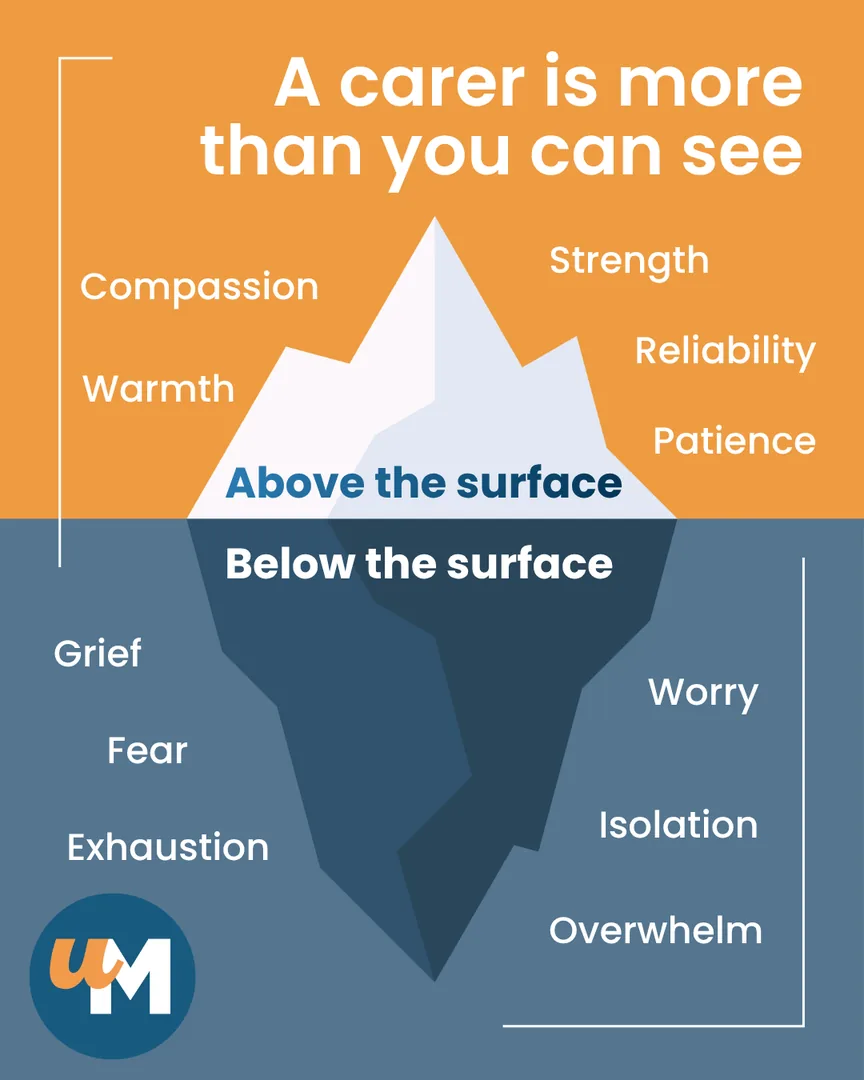
Being a carer: what people don’t see
Being a carer can look like…
What people see:
Patience. Resilience. Kindness.
What people don’t see:
Grief. Stress. Fatigue. Anxiety. Burnout.
Everyone tells you how well you’re coping. Nobody asks what it’s costing you.
The grief is the part nobody names: grieving someone still here, still in the next room. It’s real, it has a name (anticipatory grief), and you’re not a bad person for feeling it.
If you recognised yourself below the waterline, we will be running a Carers Support Group, a Male Carers Group and a Grief Cafe. No cost, no commitment.
Just a chair with your name on it.
Sources
- Written by the Unique Minds team. This guide contains no statistics or outside research.
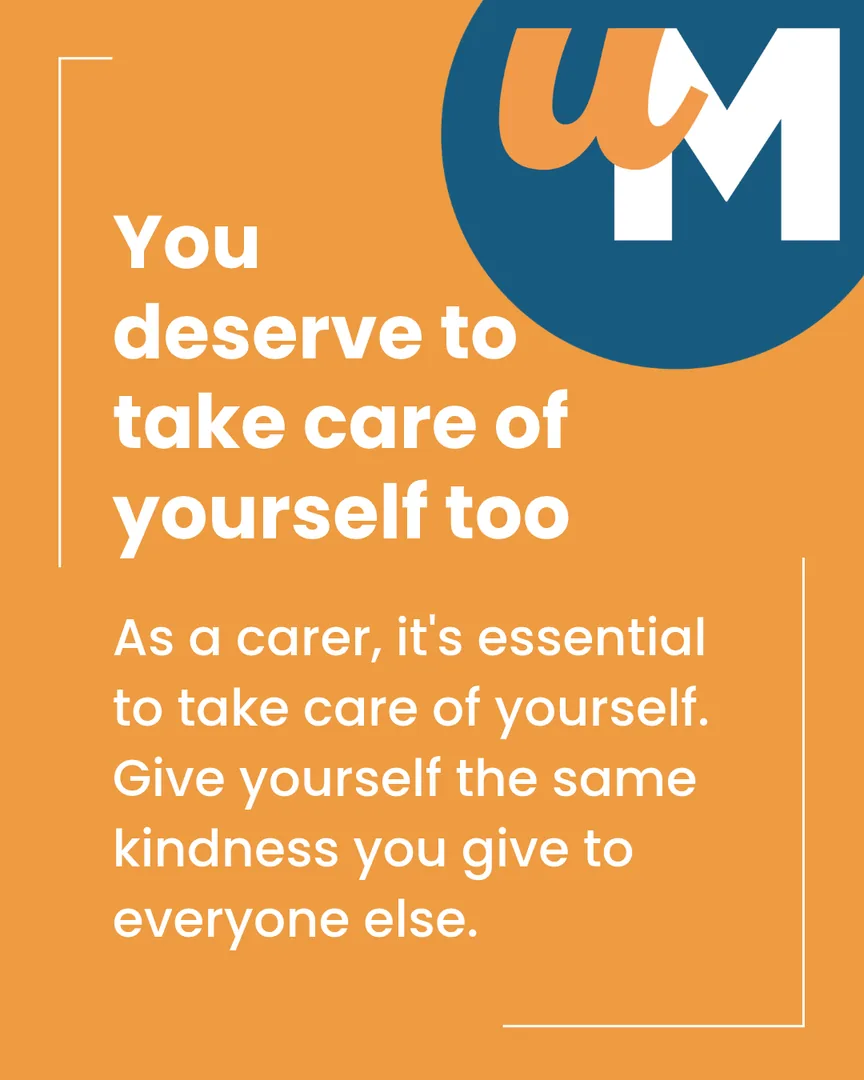
A reminder that you matter too
Reminder: as a carer, you deserve to look after yourself, too.
It’s not selfish. It’s essential.
You already know this when you say it to someone else. It’s harder to believe about yourself.
So, small and specific. Pick one this week:
- Ten minutes outside, on your own
- Say yes when someone offers to sit with them
- Book the GP appointment you keep putting off
- Message one friend back
- Come to one of our support groups when they start, just once, no commitment
- Message a Wayfinder
You matter in your own right, not only as somebody’s support.
Send this to a carer who needs permission.
Sources
- Written by the Unique Minds team, drawing on Alzheimer’s Society guidance for carers: How can you look after yourself as a carer of someone with dementia?
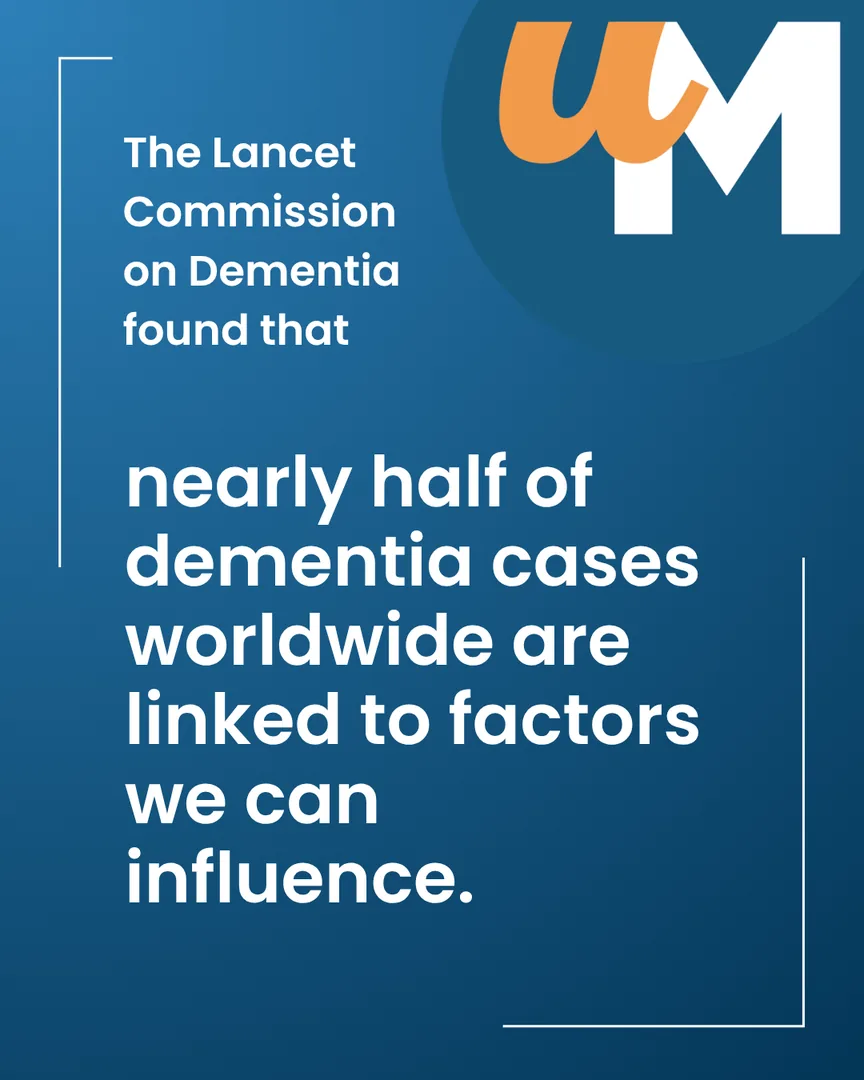
What we can influence
The Lancet Commission on Dementia found that nearly half of dementia cases worldwide, around 45%, are linked to factors we can influence.
Sources
- Livingston G and others, Dementia prevention, intervention, and care: 2024 report of the Lancet standing Commission, The Lancet, 31 July 2024
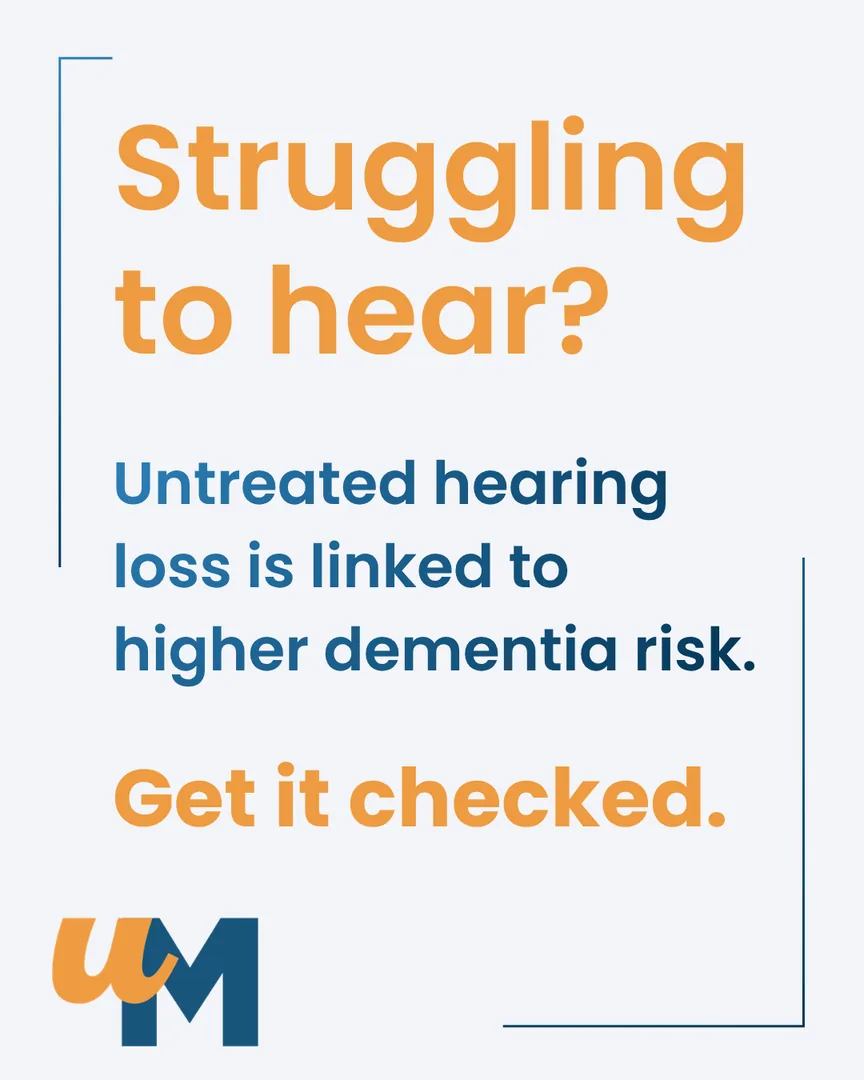
Hearing
Struggling to hear? Untreated hearing loss is linked to higher dementia risk. Get it checked.
Sources
- Livingston G and others, Dementia prevention, intervention, and care: 2024 report of the Lancet standing Commission, The Lancet, 31 July 2024
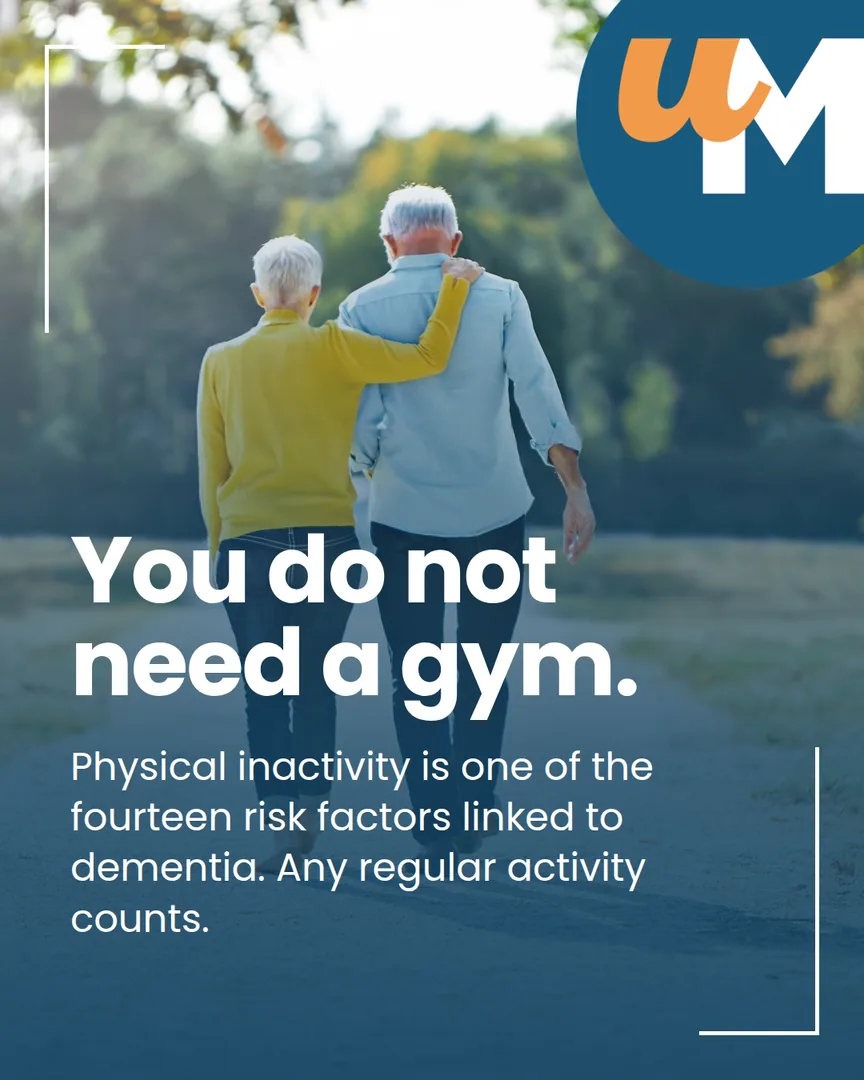
Activity
You do not need a gym.
Physical inactivity is one of the fourteen risk factors linked to dementia, but “activity” is a much lower bar than most people think.
Walking to the shop instead of driving. Gardening. Dancing in the kitchen. Chair-based exercise if standing is difficult. Getting off the bus a stop early.
If you care for someone, doing it together is worth twice as much: the movement, and the being outside with another person.
Our outreach sessions will include gentle chair-based exercise and a fair amount of singing, and nobody there is judging anyone’s form.
Sources
- Livingston G and others, Dementia prevention, intervention, and care: 2024 report of the Lancet standing Commission, The Lancet, 31 July 2024
Talk to a Wayfinder
Free, and no referral needed. Message us to talk to a Wayfinder.
Social contact
When did you last see a friend?
Not a nurse. Not the pharmacist. Not the person on the phone about the blue badge. A friend.
Social isolation is one of the fourteen risk factors the Lancet Commission links to dementia, and caring is one of the quickest routes into it. The diary empties. People stop ringing because they do not want to intrude.
So take this as your nudge. One message, to one person, today.
And if your world has got very small, we are setting up support groups. They will be free, and you will be able to walk in knowing nobody.
Sources